Ana Luiza Sa
1. Congratulations on winning in the Global Photography Awards! Can you share a little about yourself, what inspired you to pursue photography, and how has your journey evolved since your first shot?
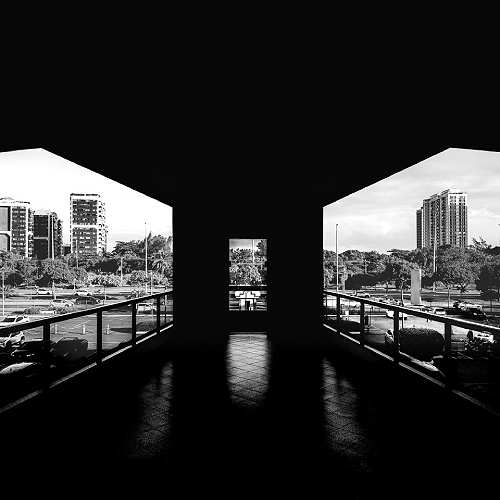
I feel truly honored to receive this Double Silver Award for my photograph “Framed by Shadows,” so thank you very much. My name is Ana Luiza, and I am an architect, designer, artist and photographer. I began participating in photography competitions at the end of last year, and since then, I have learned a lot through this process. As a result of my work, I have received more than fifteen awards and recognitions, which I see as a rewarding achievement and a reflection of my dedication, practice, and continuous commitment to photography. Since I first began exploring photography, I have continued to grow through practice, research, and experimentation, gradually developing a deeper understanding of how to translate my ideas and perspective into photographs.
2. Can you share the story or inspiration behind your award-winning piece? How does winning this award make you feel about your journey in photography?
On the day I took the photograph, I had left home with a completely different goal: to have an electronic device repaired. Surprisingly, I came back home with a photograph that would go on to receive a Double Silver Award. I had not yet visited the second floor of the building. When I arrived, I noticed that, at that particular time of day, the projected shadows were especially interesting, enhanced by the subtle side lighting. So I pressed the button to bring the panoramic elevator to the second floor where I was. As it arrived, it introduced a subtle frontal light, creating the balance of light and shadow I needed to capture the scene. There is a long journey ahead, and I think I should turn every opportunity I have into art through photography.
3. How do you decide which photo to submit for a competition?
My goal was to participate in a category that was different from those I usually enter in competitions. I believed this photograph had the potential to open new doors for me in that direction. The light and shadows also played an important role in my decision to submit it as a black and white photograph. I thought the monochromatic treatment would emphasize these elements and strengthen the visual impact of the image.
4. What first made you pick up a camera?
I was introduced to photography quite casually through my grandfather, who lent me his camera to take on one of those school outings that every child experiences. From that moment on, photography gradually became part of how I observe and understand the world around me. My grandfather also introduced me to drawing, teaching me the power of observation. Over the years, as I practiced drawing alongside photography, I gradually began to reinterpret the lessons he had shared with me and realized how much sense everything he had told me made. Looking back, I believe that this combination of drawing, photography, and the way my grandfather taught me to observe became an important foundation for the way I see and interpret the world today.
5. What’s your favorite type of photography, and why do you love it?
Lately, I have been particularly drawn to black and white photography because it allows me to explore more deeply the nuances between gray, black, and white. Without color, the viewer’s attention becomes more focused on the scene itself. There is no visual distraction from color, which is also an important element of photography and can naturally draw the viewer’s attention away from the subject. This allows me to explore other elements of the image, such as light, shadow, contrast, and composition.
6. What’s your go-to camera setup, and why does it work best for your projects? What’s your favorite feature?
I work with my smartphone, which I see as a versatile and flexible tool. I also have a professional camera that I consider lightweight and very comfortable to use, and one of my favorite features is its compact design. Equipment is a tool that helps me turn my perspective into images and share the way I see the world with others. What truly defines my photography is the way I observe, recognize an image, and translate what I see into a photograph.
7. If someone looked at your work, what’s the one thing you’d want them to feel?
I would like my work to evoke meaningful reflections and help people feel reconnected with themselves and their own thoughts. Sharing my perspective through my lens with others is something I consider a gift.
8. What was the most challenging part of capturing your winning shot?
In addition to working with the light and shadows that were already present in the space, I also pressed the button to bring the panoramic elevator to the second floor where I was, creating the subtle frontal light I was looking for. This made the moment even more challenging, as someone could have needed to use the elevator just at I was taking the photograph. I had to work quickly.
9. Is there a specific place or subject that inspires you the most?
Lately, I’ve found that I am most inspired by the unexpected — by what is waiting to be discovered and photographed, often in places or moments. I enjoy being surprised by what I encounter, especially when light, architecture, and environment come together in an unexpected way.
10. Who or what has been your biggest influence in photography?
That’s an interesting question. I don’t have one specific influence to mention. I have been using my power of observation to learn from the work of different photographers. What influences my work is not necessarily what I see in their photographs, but what I learn and interpret from them, combined with my own knowledge and experience. All of this becomes part of my process of developing my own way of photographing and expressing how I see the world. It’s about observing, interpreting, learning, and gradually developing my own photographic language.
11. What message would you share to inspire photographers to participate in photography awards, and what advice would you give to help them excel in the competition?
Take the first step. No matter the results, keep working on the message you want to communicate through your photography. Sometimes, what is unconventional takes longer to be noticed, but eventually, someone will notice it. Keep developing your work and discover your own way of seeing and shining.
12. What’s one piece of advice for someone just starting in photography?
Appreciate your photographs, celebrate every small step forward and every achievement along the way. Keep going, head up, eyes wide open, and “blink less.” Your next award-winning photograph could be right in your own backyard.
13. What role do editing and post-processing play in your creative workflow?
The editing and post-processing play a supporting role, guiding the viewer’s eye toward the subject and enhancing the photograph.
14. How do you see technology, like AI, influencing the future of photography and your own approach?
AI may become a lasting part of our everyday lives, like email, or it may simply remain a passing trend. I see AI as a tool to communicate and represent ideas, much like 3D, for example, but not as a solution in itself.
15. If you could photograph anything or anyone in the world, what would it be?
I would probably choose to photograph my family gathered together in a beautiful place. In architectural photography, people also play an important role. When a human figure appears in a photograph, it changes the way we perceive the space by giving us a sense of scale and creating a feeling of empathy.